

Glass food containers have a reputation for being safe and reliable, but not all are created equal. Let's explore the details.
Yes, glass food containers can be safe, but only if they’re food-grade and free from harmful chemicals. Always look for certifications and trusted suppliers.
Understanding the materials and certifications behind your glass packaging is key to making informed choices.
1. What Is Glass Made From?
Glass is a remarkable material, but what exactly goes into making it?
Glass is made from sand (silica),1 soda ash, and limestone, melted at high temperatures. These simple ingredients give it strength and versatility.

The Science Behind Glass
The core ingredient of glass, silica (a major component of sand), is heated to a molten state—over 1,700°C (3,092°F)! Soda ash lowers the melting point, making the process more efficient, while limestone stabilizes the final structure. Sometimes, additional ingredients like boron or magnesium are added to modify properties, such as heat resistance or transparency.
The result? A versatile material that is chemically stable and non-reactive. This makes glass ideal for food and beverage storage, but only when processed correctly.
| Ingredient | Purpose |
|---|---|
| Silica | Main structural component |
| Soda ash | Reduces melting temperature |
| Limestone | Adds strength and stability |
However, not all glass is suitable for storing food. That brings us to food-grade glass.
2. What Is Food-Grade Glass?
Why do we need “food-grade” labels for glass containers?
Food-grade glass is made to be non-toxic, lead-free,2 and safe for storing consumables, passing stringent safety standards.
How Food-Grade Glass Differs
Unlike regular glass, food-grade glass undergoes strict testing to ensure it won't leach harmful substances into food or drink. For example:
- Lead and cadmium-free: These heavy metals are sometimes used in colored glass but are banned in food-safe varieties.
- Thermal resistance: Food-grade glass is often tempered or borosilicate, preventing cracks during extreme temperature changes.
In the U.S., the FDA oversees food-grade standards, while other regions like Europe rely on similar regulations. Always check for markings like “food-safe” or certifications from regulatory bodies.
3. Does Glass Have BPA?
BPA is a buzzword in the food safety world. Does it apply to glass, too?
No, glass naturally doesn’t contain BPA,3 a chemical found in some plastics. It’s inherently safer for food storage.
BPA Concerns and Glass Containers
BPA (Bisphenol A) is a chemical used in producing polycarbonate plastics and epoxy resins, both of which can leach into food under heat. Glass, on the other hand, is chemically inert, meaning it doesn’t react with food or liquids.
However, caution is needed when glass containers have plastic lids or seals. These components may contain BPA or phthalates. Look for lids labeled BPA-free to ensure safety.
Glass also offers advantages like being odor-resistant and easy to sterilize, making it a go-to choice for health-conscious consumers.
4. How Do We Know If A Glass Bottle/Jar Is Food-Grade?
Spotting food-grade glass doesn’t have to be tricky.
Food-grade glass is labeled as such or certified by regulatory bodies like the FDA or EU. Look for markings on the packaging.
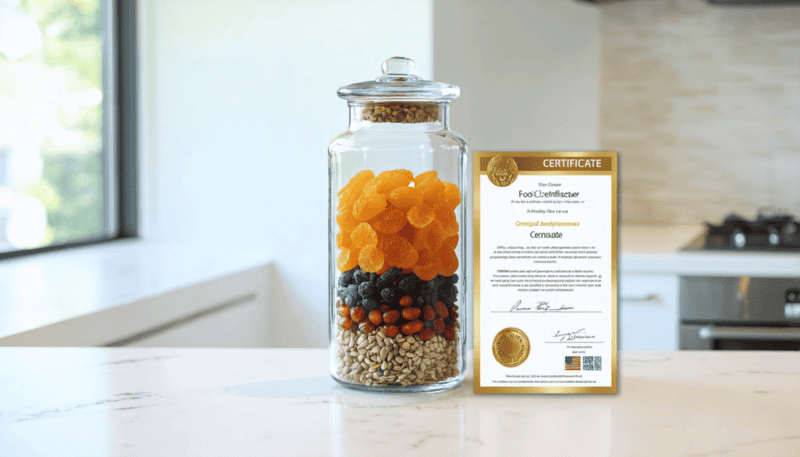
Tips for Identifying Food-Grade Glass
Here’s how to ensure your glass packaging is safe:
- Check for certifications: Look for FDA, EU, or similar safety standards.
- Inspect the surface: Food-grade glass is smooth, without porous textures that trap bacteria.
- Avoid suspiciously cheap products: Extremely low-cost glass might skip safety testing.
- Ask for documentation: Reliable suppliers, like us, can provide proof of food-grade certification.
Even visual cues can help. For example, cloudy or brittle glass might indicate poor quality. By sourcing glass containers from trusted manufacturers, you eliminate guesswork.
Conclusion
Not all glass containers are safe for food. Choosing food-grade glass ensures your products remain uncontaminated and meet the highest safety standards.
You need to understand the importance of silica in making glass durable, safe, and versatile for various applications. ↩
You need to understand how lead contamination in glass impacts health and why lead-free certification is essential for food-grade glass. ↩
You need to understand the health risks associated with BPA and how glass, being naturally BPA-free, offers a safer alternative for food storage. ↩